Bucks County's 304 voting districts will check in voters on Apple iPads that cannot connect to the internet on Election Day, Tuesday, Nov. 3.
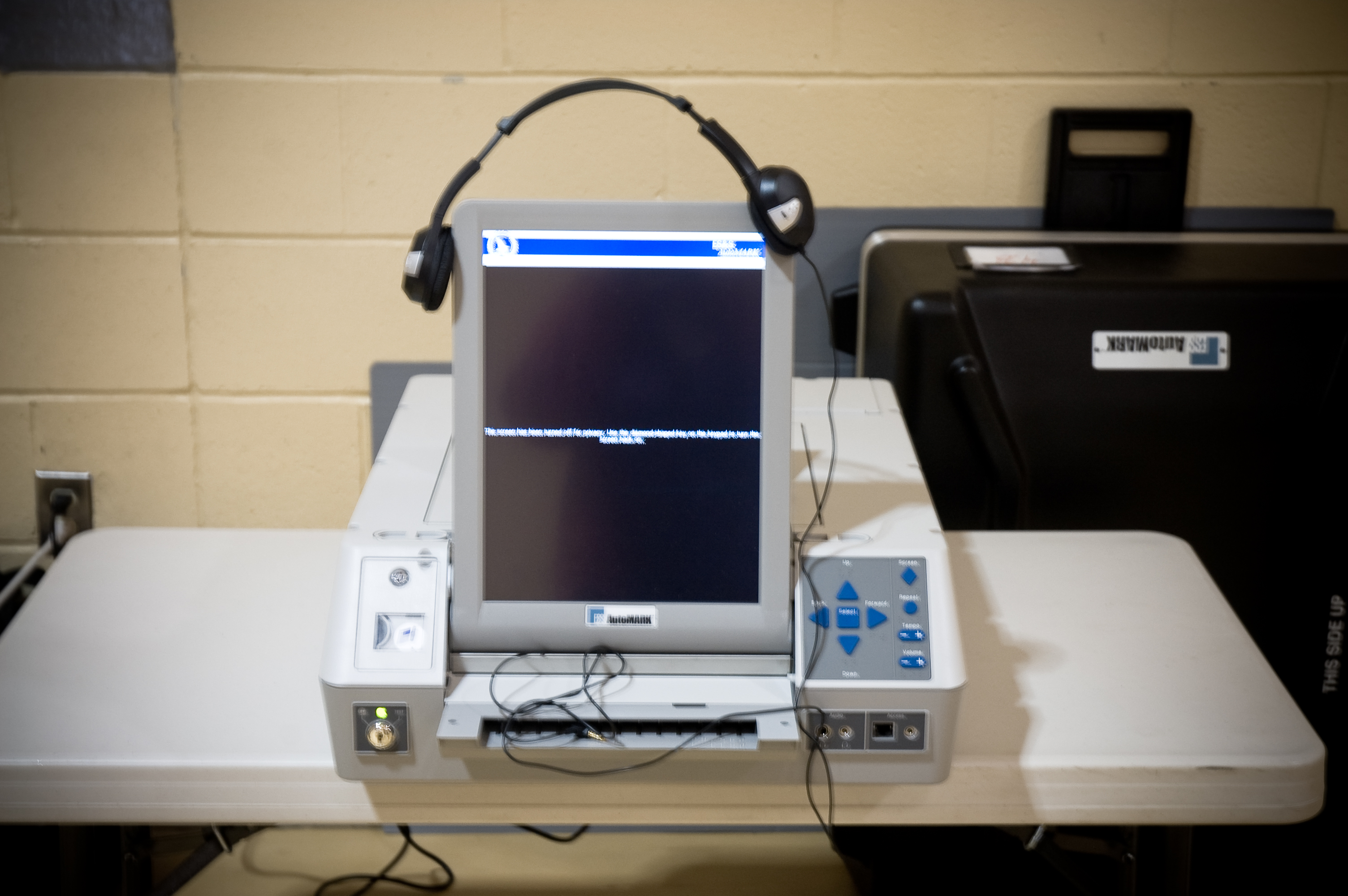
The county uses KnowInk Poll Pads, tablet-based electronic pollbooks that let poll workers look up registrations and issue the correct ballot. Each unit sits in a custom stand with a built-in thermal printer, according to the Pennsylvania Department of State's certification report for Poll Pad version 4.2.1, issued Aug. 25.
The state prohibits the tablets from connecting to KnowInk's cloud server, called ePulse, during polling hours, according to the certification report. Up to six Poll Pads at a single location can still talk to each other through an encrypted peer-to-peer connection on a local wireless router, sharing check-in data without touching the internet.
That offline requirement is a security feature, not a limitation. Both KnowInk's system and the ES&S ExpressPoll system used in Philadelphia meet AES-256 encryption standards to protect voter data, the Bucks County Beacon reported as part of a collaborative investigation with Technical.ly.
Pennsylvania had planned a pilot program to test internet connectivity for e-pollbooks during the May 2026 primary. The state postponed it until at least 2027, citing low interest and unresolved technical questions.
What happens if an iPad fails
Each tablet's internal battery provides up to 10 hours of power when unplugged, according to the state certification report. Polls are open for 13 hours, so a fully charged unit would need wall power for the final stretch.
If the technology fails entirely, the county Board of Elections must have backup paper ballots available so voters can keep casting ballots while the problem is fixed, according to the Department of State. Counties must also report any malfunction to the secretary of the commonwealth within 60 days.
Pamela Smith, president and CEO of Verified Voting, an organization that advocates for responsible election technology, told the Beacon that "[having] backups already in place, and the poll workers knowing when to deploy them is a very strong mitigation."
Backup plans matter. In 2025, a Fayette County e-pollbook was not updated in time, forcing poll workers to switch to paper records. That same year, Chester County's printed paper pollbooks accidentally left off voters registered as independents or with third parties, disrupting check-ins and increasing provisional ballot use.
How voter data gets onto the tablets
Before Election Day, voter data is extracted from the state's Statewide Uniform Registry of Electors, known as SURE, and transferred securely to KnowInk for conversion. The data is then loaded back onto the tablets. The state certification also requires counties to disable the iPad's driver's license barcode scanner so poll workers do not ask voters for ID when it is not required by law.
James O'Malley, Bucks County's deputy director of communications, told Technical.ly in April that "most, if not all, our security measures for submitting/auditing votes are dictated by either law or PA Department of State guidance."
Bucks County has 483,678 registered voters across 54 municipalities, according to county records as of May 8, 2026. Polls open Nov. 3 at 7 a.m. and close at 8 p.m.