White-footed mice and acorn crops do more to drive Lyme disease risk than white-tailed deer, according to a study that found no link between deer populations and the density of Lyme-carrying ticks.
The study, led by disease ecologist Richard S. Ostfeld at the Cary Institute of Ecosystem Studies, was published Aug. 17 in the Proceedings of the National Academy of Sciences (PNAS). Researchers used more than 30 years of monitoring data from forested sites in New York State and found no statistical connection between deer abundance and the density of nymphal black-legged ticks, the life stage responsible for most human Lyme infections.
The finding matters locally. Pennsylvania has led the nation in Lyme disease cases for 10 of the last 13 years, accounting for roughly 22% of all U.S. cases over the past decade, according to the Pennsylvania Lyme Resource Network. Bucks County's Lyme incidence rate stood at 26.30 per 100,000 residents as of spring 2026, according to Pennsylvania Department of Health data reported by Patch. Statewide, cases rose to 18,747 in 2025, up from 16,624 in 2024, according to state data reported by the Reading Eagle.
Instead of deer, the study pointed to white-footed mice as the key animal host. Years with large mouse populations were followed the next year by a roughly 40% increase in nymphal ticks, because mice provide the blood meal that sustains tick larvae. Mice also infect up to 93% of the larvae that feed on them with Borrelia burgdorferi, the bacterium that causes Lyme disease.
University of Pennsylvania biology professor Dustin Brisson, who studies Borrelia burgdorferi but did not work on the Cary Institute study, told WHYY that the deer question comes up constantly. "At least in the majority of the locations where Lyme disease is a problem, the variation in the amount of deer is not a major problem," Brisson said.
The study also found that acorn production by red oak trees is the engine behind mouse population booms. But heavy acorn years feed more than mice. Skunks, squirrels and opossums also thrive, and those animals are far less efficient at transmitting Lyme bacteria. The result: more ticks overall, but a stable proportion of infected ones.
Brisson told WHYY the findings are unlikely to change how tick populations are tracked or managed in the near term. You can't regulate mice, he said, and you can't go out and catch all the acorns. But the data could improve prediction models for which wooded areas harbor the most Lyme-carrying ticks.
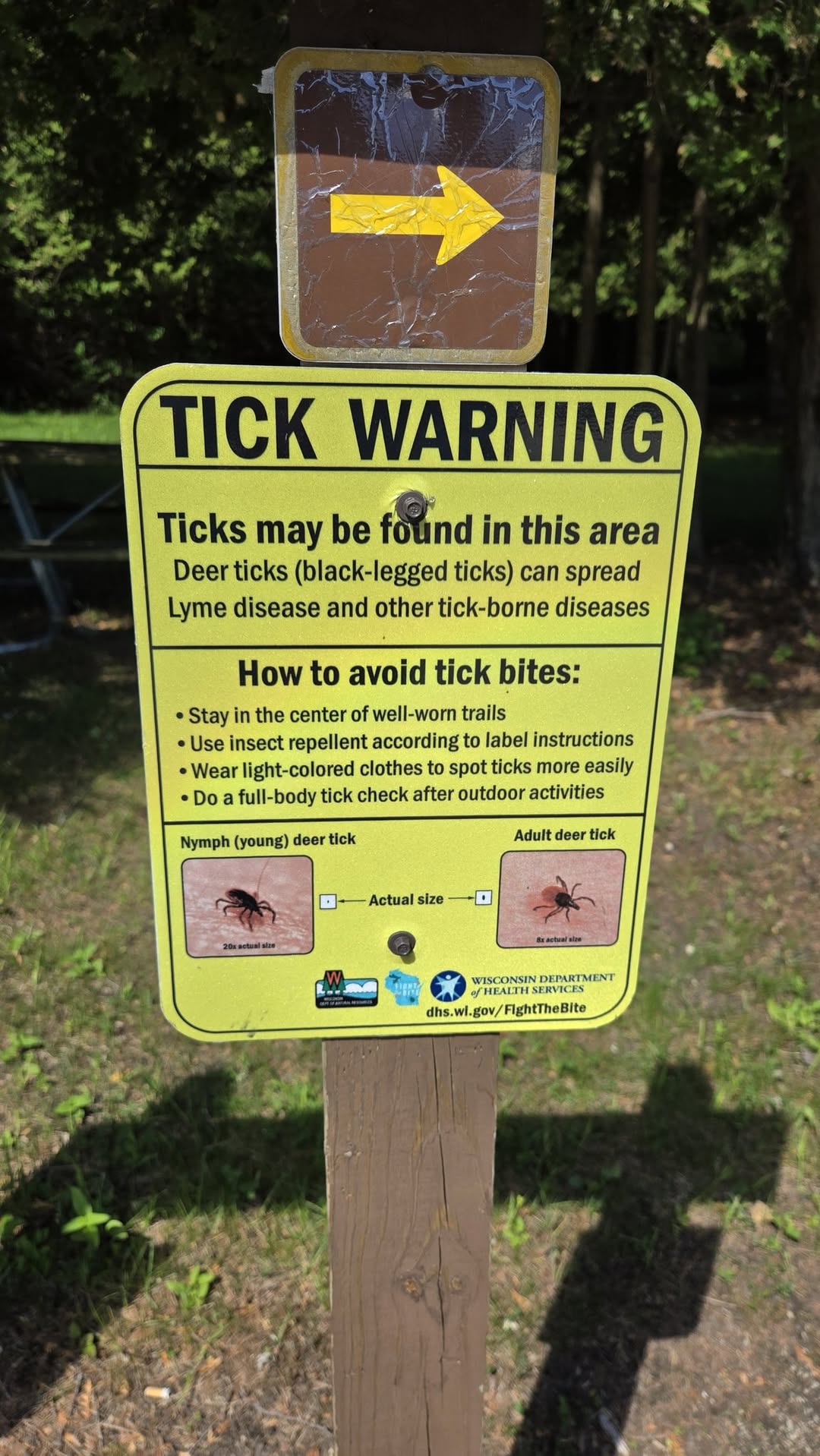
For residents near trails at Tyler State Park and other wooded areas in Bucks County, Brisson's practical advice is unchanged: check for ticks after every outing. Ticks must remain attached for at least 24 to 36 hours before they can transmit Lyme bacteria, so prompt removal prevents most infections. Brisson said his own field crews, who collect hundreds of ticks daily, rarely contract Lyme because they make sure every tick is found and removed before anyone goes home.