The U.S. Department of Justice announced Tuesday, Nov. 3, that it would deploy approximately 1,000 election monitors and observers across all 50 states. That figure is the nationwide total.
Bucks County is not on the department’s announced monitoring list. Pennsylvania’s listed counties are Philadelphia, Allegheny, Luzerne and Lehigh.
The department described the deployment as its largest monitoring effort and the first to cover every state. Its Civil Rights Division is coordinating personnel from across DOJ, U.S. attorney’s offices and federal observers from the Office of Personnel Management.
What election monitors do
The department says the purpose is to check compliance with federal voting rights laws and protect access to the ballot, including for voters with disabilities. Federal election monitoring is a longstanding practice used by Democratic and Republican administrations.
In an Oct. 22 letter to Pennsylvania Secretary of the Commonwealth Al Schmidt, DOJ attorney James T. Catania said monitors would observe and document issues, not intervene in voting, The Philadelphia Inquirer reported.
The letter said monitors would identify themselves to poll managers, dress in business casual clothing without DOJ insignia and carry no firearms. Concerns they observe would be relayed to team leaders, who could contact local election officials.
Limits on access in Pennsylvania
State officials have said DOJ monitors have no greater right of access than members of the public. Deputy Secretary for Elections and Commissions Jonathan Marks told counties they could not enter restricted areas, inspect voting equipment or demand records, according to the Inquirer.
Lehigh County Executive Josh Siegel said observers would not be permitted inside county polling stations, WGAL reported.
The DOJ monitors are distinct from Pennsylvania’s credentialed partisan poll watchers. Under state guidance, poll watchers represent candidates or parties and may observe inside polling places, but cannot approach voters to challenge them, handle ballots or interfere with voting. Challenges must go through the judge of elections.
Authorized congressional observers are another category: House or Senate employees with written authorization to gather information. The Inquirer reported that they may be present inside polling places under federal law, but may not handle ballots or equipment, promote candidates or compromise ballot secrecy.
Why the expansion has drawn scrutiny
Votebeat and Spotlight PA reported that the scale of this year’s deployment has raised concerns among voting rights advocates, even though monitoring has typically attracted little attention and most deployments during the 2026 primaries were uneventful.
The Campaign Legal Center warned that recruiting attorneys from outside the Civil Rights Division could bring in staff without sufficient voting rights expertise or monitoring training. It said that could increase the risk of interference or intimidation.
A DOJ spokesperson told Votebeat and Spotlight PA that all monitors receive training on the state and local rules governing their assigned locations. The Inquirer also reported that ACLU of Pennsylvania legal director Vic Walczak did not view the monitors themselves as cause for alarm.
Bucks County preparations
In separate reporting about Election Day security, Bucks County Sheriff Danny Ceisler told WHYY that his office had trained with election protection professionals, lawyers and law enforcement partners. He said teams would be available across the county to assist the Board of Elections.
“We are prepared for whatever,” Ceisler told WHYY. His remarks described the county’s broader preparations for Election Day.
How to report a voting problem
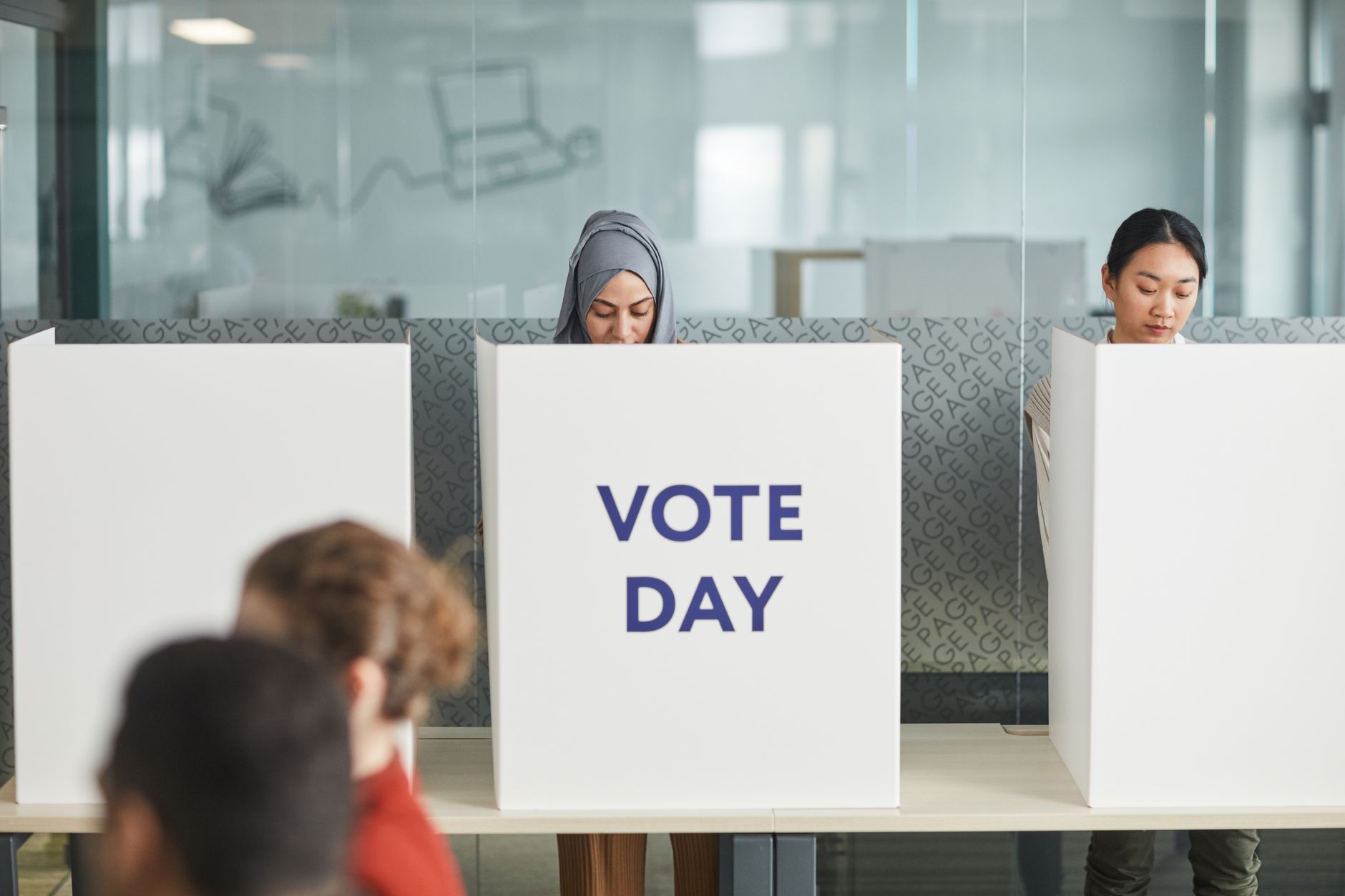
Voters who encounter a problem should alert the judge of elections or other polling-place officials. The Pennsylvania Department of State says intimidation, harassment and discriminatory conduct can also be reported to county election officials or the district attorney.
- Bucks County Board of Elections: 215-348-6154.
- Pennsylvania voter hotline: 1-877-VOTESPA, or 1-877-868-3772.
- DOJ voting rights hotline: 1-800-253-3931. Complaints may also be submitted through the Civil Rights Division’s reporting form.
Call 911 for violence or an immediate threat of violence. DOJ also asks that voting-related threats or intimidation be reported to local police and then to the department.
Pennsylvania polls are open from 7 a.m. to 8 p.m. Nov. 3. Anyone in line by 8 p.m. may still vote.